News

Reserve Bank says South Africa is ready for shocks
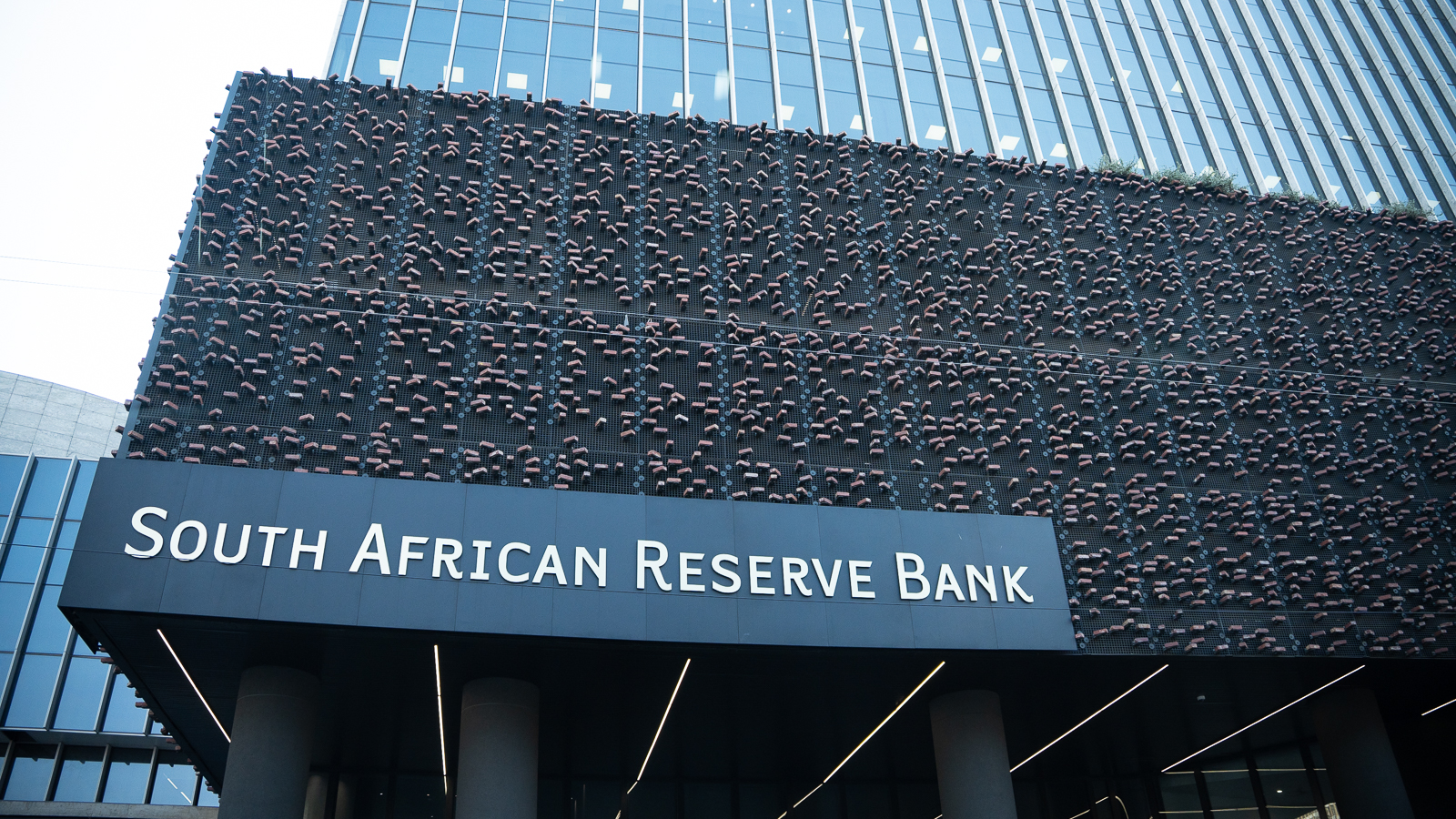
  • Bloomberg
  • Sep 09, 2026
  • 1 views
Reserve Bank says South Africa is ready for shocks
A new study from the South African Reserve Bank found that the country's 3% inflation rate target can withstand several economic shocks.
Finance Bloomberg 9 Sep 2026 Finance Reserve Bank says South Africa is ready for shocks Bloomberg  ·9 Sep 2026 South Africa’s 3% inflation target can withstand a range of economic shocks as expectations have become better anchored and more forward-looking, the central bank said in a new study. In the absence of major shocks, there’s a 78% chance that inflation will remain between the central bank’s 2% and 4% tolerance band, authors Theo Janse van Rensburg, Jeffrey Rakgalakane and Rudi Steinbach said in an economic note published late Tuesday. South Africa formally lowered its inflation target to 3% in November, with a 1-percentage-point tolerance band, replacing the 3% to 6% range that had been in place for 25 years. The central bank had aimed for the band’s 4.5% midpoint since 2017. Since the outbreak of the Iran war on 28 February, the nation has faced mounting price pressures. Restrictions on traffic through the Strait of Hormuz, a key global supply route, have pushed up oil and fertiliser costs, raising inflation to 4.5% from 3% before the war started. The central bank responded by raising interest rates by 25 basis points in May to 7%, before pausing in July after revising its inflation forecasts lower to support economic growth. Governor Lesetja Kganyago said last week that there is room for officials to continue adopting a measured approach to interest rates in the face of a polyshock. The study backs up this assessment. A typical shock to key inflation drivers such as food, oil, electricity prices, the rand and expectations would cause it to deviate by less than 1 percentage point from the 3% goal over a year, the authors wrote. Of the key drivers, oil poses the biggest inflation risk. The study found that an almost 40% oil-price shock lasting three quarters would add an average of 0.87 percentage points to inflation in the first year, with the impact peaking at just over 1 percentage point. Yet inflation expectations would rise by only 0.15 percentage points, it found. Even when several shocks occur together, the authors estimate a 62% chance that inflation will fall between 2% and 4%. To lift inflation by more than a percentage point for a full year, a shock that would not be considered temporary, the rand would need to depreciate by about 14%, while oil prices would need to rise by around 46%, the study found. Food prices would need to increase by 4.8%, unit labour costs by 5.1% and, electricity by 17.1%, and other administrative prices by 9.4%. The study attributes the outcomes to more forward-looking inflation expectations, particularly since the South African Reserve Bank adopted its preferred goal of 4.5% in mid-2017. “These results reflect increased monetary policy credibility, which bodes well for the achievement of a 3% inflation target,” it found. “It is important to note that when lower inflation is accompanied by reduced volatility – as has been the case historically – the responses to shocks are likely to be more muted,” the authors said. Subscribe Show comments Autoload comments

Please Accept Cookies for Better Performance