_1137.png?v=1788503569)
 Breaking News

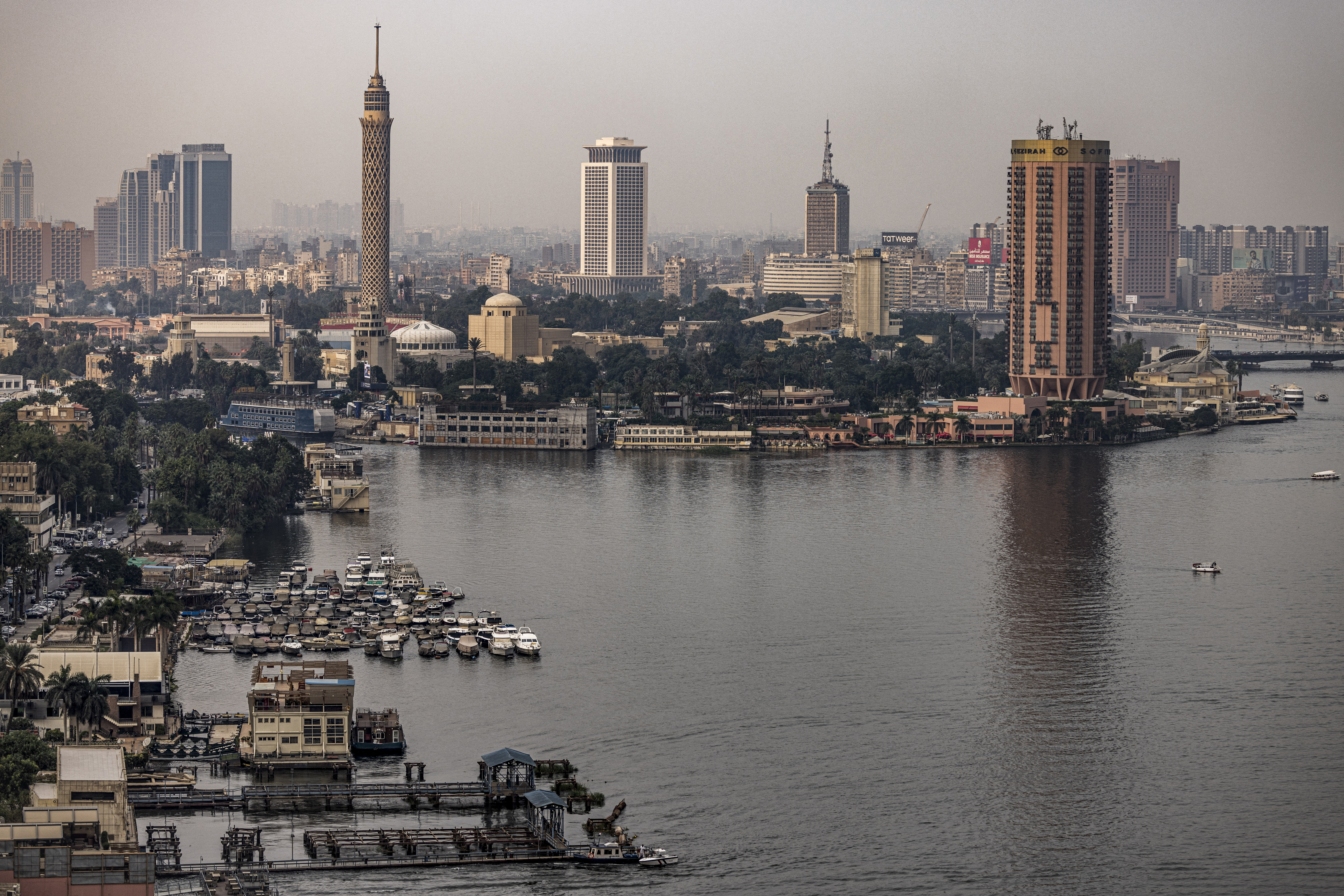
The Egyptian banking sector has been defined by resilience rather than dynamism for most of the past 15 years. The Arab Spring, Covid-19 pandemic and the Russian invasion of Ukraine have all driven both inflation and chronic foreign exchange shortages, forcing banks to focus on survival rather than long-term planning.
Yet after another difficult period that culminated in currency liberalisation in March 2024 and renewed IMF support, the country's lenders have emerged in unexpectedly robust health.
First quarter results for 2026 underline just how dramatically their fortunes have improved. According to the Central Bank of Egypt (CBE), banks operating in the country generated combined net profits of E£218.41bn ($4.4bn) in the first three months of the year, the highest first quarter profit ever recorded by the country's banks.
Net interest income reached E£284.47bn ($5.6bn) and total net operating income E£306.12bn ($6bn), reflecting the benefits of high interest rates, growing customer numbers and a much more stable operating environment.
These figures also suggest that Egyptian banks are beginning to benefit from recent economic reforms. The floating exchange rate has largely eliminated the severe foreign currency shortages that hit the economy hard in 2023 and early 2024, while multilateral support and higher broader foreign direct investment, including from the Gulf states, have strengthened confidence in the financial system.
At 14.3% in June, inflation remains well above the central bank's long-term target of 5-9% but has stabilised somewhat since devaluation.
Egypt's biggest banks are playing a dominant and growing role in this success. These include state-owned National Bank of Egypt (NBE) and Banque Misr, which enjoy advantages over most of their private sector competitors in terms of their enormous branch networks of 635 and 850 respectively, and extensive payroll relationships. Three listed banks, Commercial International Bank (CIB), QNB Egypt and Banque du Caire, complete the country's top five banks.
The growing dominance of the big banks may be because they have the financial muscle to invest heavily in digital banking platforms, cybersecurity and artificial intelligence, while also benefiting from longstanding relationships with Egypt's biggest corporate borrowers and public-sector institutions. CIB, for example, reported first quarter net income of EGP17.8bn, up 7% year-on-year, QNB Egypt's net income was 33% higher, despite
By contrast, many smaller banks face a more demanding future, given that they must invest in digital infrastructure in competition with institutions that possess far greater financial resources.
Consolidation therefore appears increasingly likely, whether through mergers, acquisitions or strategic partnerships. The result could be a banking system that is simultaneously stronger and more concentrated.
The expansion has been encouraged by the CBE's financial inclusion strategy, which has dramatically increased the number of accounts held by Egyptian adults over the past decade.
Millions of previously unbanked citizens now have access to formal financial services through simplified accounts, mobile banking and digital platforms. The number of Egyptians with any form of bank account increased from 17.1m in 2016 to 53.8m in the middle of 2025, according to CBE figures.
The current boom owes much to Egypt's exceptionally high interest rate environment. The CBE maintained restrictive monetary policy throughout much of the inflation crisis, making lending more profitable but sustaining current earnings levels may prove difficult.
If and when inflation eases, interest margins are likely to narrow, so banks will need to look to stronger growth in their loan books, higher fee income and perhaps operational savings to maintain profit growth.
Will privatisation finally happen?
One positive impact of the ongoing banking boom is the impact on the government's long delayed privatisation programme. Successive Egyptian governments have announced plans to privatise banks, only for political upheaval, economic crises or unfavourable market conditions to derail the process.
The partial sale of Bank of Alexandria in 2006 was the country's only major partial or full banking privatisation prior to 2024, while repeated attempts to float Banque du Caire have been postponed because of the global financial crisis, the 2011 revolution and the recent foreign exchange crisis.
The first tangible sign that the programme was genuinely moving again came with the successful initial public offering (IPO) of 30% in United Bank. Controlled by the CBE since 2006, the bank finally secured a listing on the Egyptian Exchange in late 2024 after several years of preparation. The issue was heavily oversubscribed by retail investors, while institutional interest demonstrated renewed confidence in Egyptian financial assets following exchange rate liberalisation.
It showed that domestic and international investors were once again willing to buy Egyptian banking stocks at the right price and with important economic reforms underway.
The combination of stronger bank profitability, improving macroeconomic stability and pressure from international lenders has persuaded policymakers that the conditions may finally be in place to revive the privatisation programme.
Rising profits could be changing perceptions of Egypt's banking sector among potential investors but it is difficult to be sure until that optimism is put to the test with another IPO.
The renewed focus on banking forms part of a much wider effort to expand private sector participation in the Egyptian economy. Under agreements struck with the IMF, Cairo has pledged to reduce its involvement in many parts of the economy and encourage more competition more generally, including in the ports and logistics, energy, insurance and financial services sectors.
It is also hoped that these divestments will raise foreign exchange, improve corporate governance, attract strategic investors and deepen the country's capital markets. While some of the privatisation programme may relate to the sale of poorly performing assets, the sale of state owned banks may prove particularly attractive, as many are profitable and well capitalised.
Banque du Caire will be next up. It is a much bigger bank than United Bank and has one of the country's biggest branch networks. Its operations have been streamlined in recent years to create a more profitable financial institution that could be attractive to investors.
Banque du Caire joined in the first quarter 2026 success, recording a 16% rise in net income to E£4bn, with growth in both its retail and corporate banking operations. Its capital adequacy ratio also remained above 20%, comfortably exceeding regulatory requirements.
The privatisation receipts would feed into the government coffers and demonstrate continued commitment to IMF reforms. The size of the stake on offer and share price have yet to be set but it will be interesting to see the levels of both.
The more profitable the bank becomes, the less the government needs to sell it and there will be an obvious temptation to seek a more ambitious price. The conundrum is clear: waiting too long could allow for another deterioration in the global financial markets, while moving too quickly could mean not realising the true value of the asset.
The government could also sell its remaining 20% stake in the Bank of Alexandria, in which Italy's Intesa Sanpaolo already owns an 80% stake following the 2006 sell-off.
Arab African International Bank (AAIB) has also been repeatedly mentioned as a likely candidate for partial sale. Set up by the CBE and the Kuwait Investment Authority, it has built one of the country's biggest corporate banking and trade finance operations. Its cross-border ownership structure may ultimately make any transaction more complex than a conventional IPO, but equally it could prove attractive to international investors seeking exposure to Egypt through an established regional institution.
Optimism over privatisation grows
Investors could be forgiven for thinking that the bank privatisation programme could be shelved yet again but there are several reasons for optimism. Firstly, although challenges remain, the foreign exchange market is functioning more normally than at any point since 2022. Businesses can obtain foreign currency more easily, import restrictions have eased and confidence has gradually returned to domestic financial markets.
Secondly, Cairo has shown a greater willingness to implement the politically difficult reforms demanded by the IMF, including exchange rate liberalisation and fiscal tightening.
Thirdly, Gulf investors, including sovereign wealth funds from Saudi Arabia, Qatar and the UAE, have invested billions of dollars in Egypt in recent years and continue to view the country as a strategically important market.
Finally, as already discussed, the banks themselves have rarely looked stronger. Record profitability, healthy capital ratios and expanding balance sheets create a far more compelling investment case than existed during the earlier attempts at privatisation.
Yet even these favourable conditions cannot overcome every obstacle. Questions remain over valuation, the future direction of interest rates, and the extent to which potential investors may view today's profits as the peak of the current interest rate cycle, rather than the start of a new phase of sustainable, strong growth.
Investors eye Egyptian banks
On almost every conventional measure, Egyptian banks are currently performing well and should be attractive investment targets. Capital adequacy ratios remain comfortably above regulatory minimums, liquidity levels are high, profitability is at record levels and asset quality has proved far more resilient than many analysts feared during the currency crisis.
Longer term, investors may be attracted by the sheer size of the Egyptian market. The population has already reached 120m and is forecast by the UN to reach 202m by the end of the century.
One reason for caution is that much of the banking sector's recent profitability has been generated by monetary policy rather than traditional banking. Egyptian banks have been able to earn exceptionally attractive returns on government securities while maintaining healthy lending margins.
However, if banks can successfully redirect liquidity from government securities towards productive private sector lending, including retail and SME finance, the current pace of growth may prove more durable than sceptics currently assume. That transition, however, will require sustained confidence in the wider economy.
Further IPOs would deepen Egypt's capital markets and strengthen confidence in Egypt's wider reform programme at a time when the government remains dependent on continued support from the IMF, Gulf partners and international capital markets.
However, further delays would revive memories of previous failed economic policies and reinforce the perception that Egypt still struggles to convert political policy into genuine action.
The outlook for the next five years depends largely on whether stronger economic growth can compensate for narrowing interest margins but there are reasons for optimism.
The IMF expects Egypt's economy to accelerate as macroeconomic reforms take effect, inward investment is likely to increase following exchange rate liberalisation and the tourist sector should pick up if the geopolitical situation even partly settles down.
Moreover, large scale infrastructure projects, manufacturing investment and rising natural gas production should all generate additional demand for financing. While nothing is guaranteed, the future looks bright for the Egyptian banking sector.