_1137.png?v=1788503569)
 Breaking News

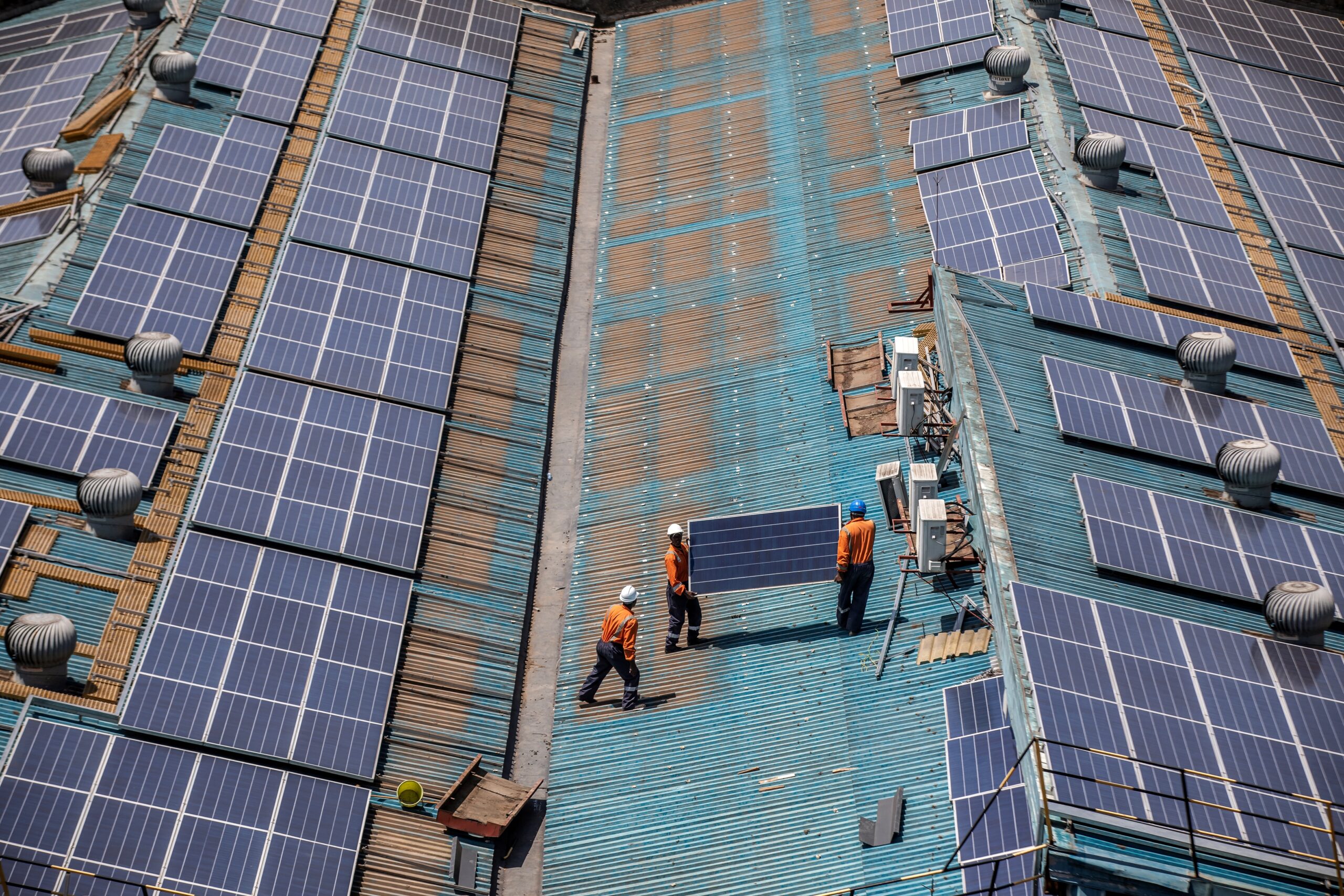
Increasingly innovative ways to manage debt are being deployed by African states to finance energy and environmental projects. Faced with volatile international capital markets and the need for more power, governments are using multilateral credit facilities, risk guarantees and bespoke debt swaps to restructure debt into investment. Although very varied, these strategies are not without controversy.
Some African governments are now buying their own expensive, high-yield commercial debt on the secondary market. Purchases may be funded by issuing new debt backed by a multilateral development bank's credit guarantee or a concessional loan, which means that the new debt carries a significantly lower interest rate and often a longer repayment timeline.
The difference in interest payments is often designed to create immediate fiscal savings, which are legally deposited into a dedicated domestic project fund. An independent trustee monitors this fund to ensure it wholly and solely finances the pre-agreed energy, climate or nature infrastructure.
The rise of debt swaps
At the forefront of these strategies is a growing reliance on the African Development Bank (AfDB) and other development finance institutions. African countries in a position to turn to the debt markets have tended to be vulnerable to high coupon rates on international bonds, which drain scarce foreign exchange reserves. By utilising the superior credit ratings of multilateral lenders - and their ability to secure concessional terms - governments are finding ways to systematically buy back this expensive commercial debt.
This frees up scarce financial resources to fund capital-intensive projects, particularly in the power sector, where many African governments are targeting rapid electrification programmes.
One of the most prominent examples of this trend was the Zambian government's $1.36bn debt-for-development deal to retire its outstanding 2053 Eurobonds, completed in June 2026. The transaction was anchored by a $600m low interest AfDB concessional loan.
Following an intensive period of broader debt restructuring, Lusaka completed the deal to finance power sector investment. Rather than being absorbed into the general government budget, the money saved is being ringfenced for specific projects, including a $275m grid upgrade programme to be rolled out over the next 15 years.
It is hoped that grid improvements will encourage private sector investment in the new generation capacity needed to power economic growth and reduce the country's reliance on the hydro sector, which is becoming increasingly vulnerable to climate change-induced variations in rainfall. It will also make the grid more capable of absorbing variable solar power production.
Support for ESG projects
Rather than directly repurchasing rurobonds with cash loans, Cote d'Ivoire and Benin have instead used AfDB guarantees to support sovereign environmental, social, and governance (ESG)-borrowing. These allow them to raise long-term financing on better terms for pre-approved sustainable investment, such as funding rural electrification, climate adaptation and regional grid interconnections, among other projects.
In September 2022, the AfDB's African Development Fund approved a guarantee of up to €195m that enabled Benin to raise up to €500m of long-term financing dedicated exclusively to projects supporting the UN Sustainable Development Goals. Then in July 2023 the AfDB approved a €400m partial credit guarantee for Côte d'Ivoire, enabling it to raise €533m from commercial banks for projects under its national ESG Framework.
According to the AfDB, that transaction reduced Cote d'Ivoire's borrowing costs by about three percentage points, generated estimated financing savings of €57.3m, and achieved a leverage ratio of 2.6 times, meaning each euro of AfDB guarantee mobilised €2.6 of financing. Both countries have opened up access to global green capital that was previously unavailable to emerging market issuers.
The Kenyan government has made use of an innovative debt-for-climate financing agreement to finance investment in geothermal energy. Geothermal projects that use the earth's heat to drive turbines for electricity production are a very attractive part of any generation mix, as they offer 'always-on' renewable energy to help balance out more intermittent output from wind and solar projects.
Kenya's Rift Valley holds some of the world's most attractive geothermal resources and already hosts 1,000 MW of geothermal generating capacity. Yet such projects are difficult to finance because they are capital intensive. Under the terms of a bilateral agreement signed in January 2025, Germany agreed to forgive €60m in debt on the strict condition that Kenya uses the same amount of money to finance clean energy infrastructure. The freed capital is being used to part-finance the 300MW Bogoria-Silale geothermal project.
Further west, Gabon has completed a massive $500m debt-for-nature swap, utilising highly structured multilateral risk guarantees to protect its marine ecosystems. The government bought back a substantial portion of its expensive Eurobonds at a discounted cash value of $436m and financed it by issuing a lower cost $500m eco-friendly blue amortising bond that matures in 2038, marking mainland Africa's first major blue bond issuance.
This new blue bond was supported by a critical political risk guarantee from the US International Development Finance Corporation, which lowered both the risk and the interest rate on offer. The generated savings are legally required to be used to expand and manage marine protected areas now covering 30% of Gabon's maritime territory over the next 15 years.
Pros and cons
There are obvious advantages to these structured swaps. They provide immediate debt relief, offer lower overall debt repayments, longer repayment terms and may improve a sovereign's credit outlook. They also help finance much-needed projects. In addition, by linking debt reduction to tangible, specific projects such as renewable energy projects or grid expansion, these structures attract a broader pool of global ESG capital.
However, some of these wide-ranging financial innovations create significant risks regarding fiscal transparency, particularly in relation to other lenders, and also to market reputation. Moreover, a backlash against the use of derivatives by African governments is growing as international lenders crack down on opaque loans that carry substantial hidden liabilities, and civil society organisations begin to criticise them.
Governments must also accept strict, intrusive third-party monitoring of their domestic spending to prove to international investors that the generated savings reach the intended projects.
Transparent, multilateral-backed swaps seem designed to fundamentally reduce debt service costs while financing infrastructure projects. However, swaps used to fund national budgets and mask structural imbalances have attracted more criticism. In June, the IMF issued guidance on more opaque financing arrangements, after Nigeria joined Senegal and Angola in embarking on swaps focusing on lower debt costs rather than being tied to specific projects, although the structures employed vary between the three governments.
In April, the Nigerian Senate approved plans to borrow up to $5bn through a derivatives agreement with First Abu Dhabi Bank. Termed a 'total return swap' (TRS) agreement, Abuja plans to use the proceeds from the derivatives deal to refinance expensive debt and pay for infrastructure. However, it is worth noting that the IMF has more broadly praised the economic reforms implemented by President Bola Tinubu over the past three years.
The IMF resident representative for Nigeria, Christian Ebeke, said that these types of transaction carry risks and "usually they are opaque so the terms are not always very transparent when we reviewed these instruments across countries." He suggested that Eurobonds would be a better option, with the IMF fearing the emergence of an invisible debt layer across African balance sheets.
Sharp currency or interest rate fluctuations could see the lending bank demand immediate additional collateral, creating an unbudgeted, sudden cash call on the sovereign borrower, potentially draining foreign exchange reserves at the exact moment the economy is under pressure.
TRS "can provide access to hard-currency liquidity in difficult market conditions and may lower borrowing costs relative to conventional issuance", said credit ratings agency Fitch in June. However, "contractual terms including pricing, margin call thresholds and termination provisions are often not publicly disclosed, limiting the ability of legislators and market participants to assess the true cost and scale of sovereign borrowing", it added.
Ultimately, the future of African sovereign finance depends on maintaining an absolute commitment to transparency, ringfencing funds and strong institutional oversight. When properly aligned with multilateral guarantees, innovative debt structures can offer a viable pathway to unlocking much needed finance for the continent's energy transition and environmental protection.