_1137.png?v=1788503569)
 Breaking News

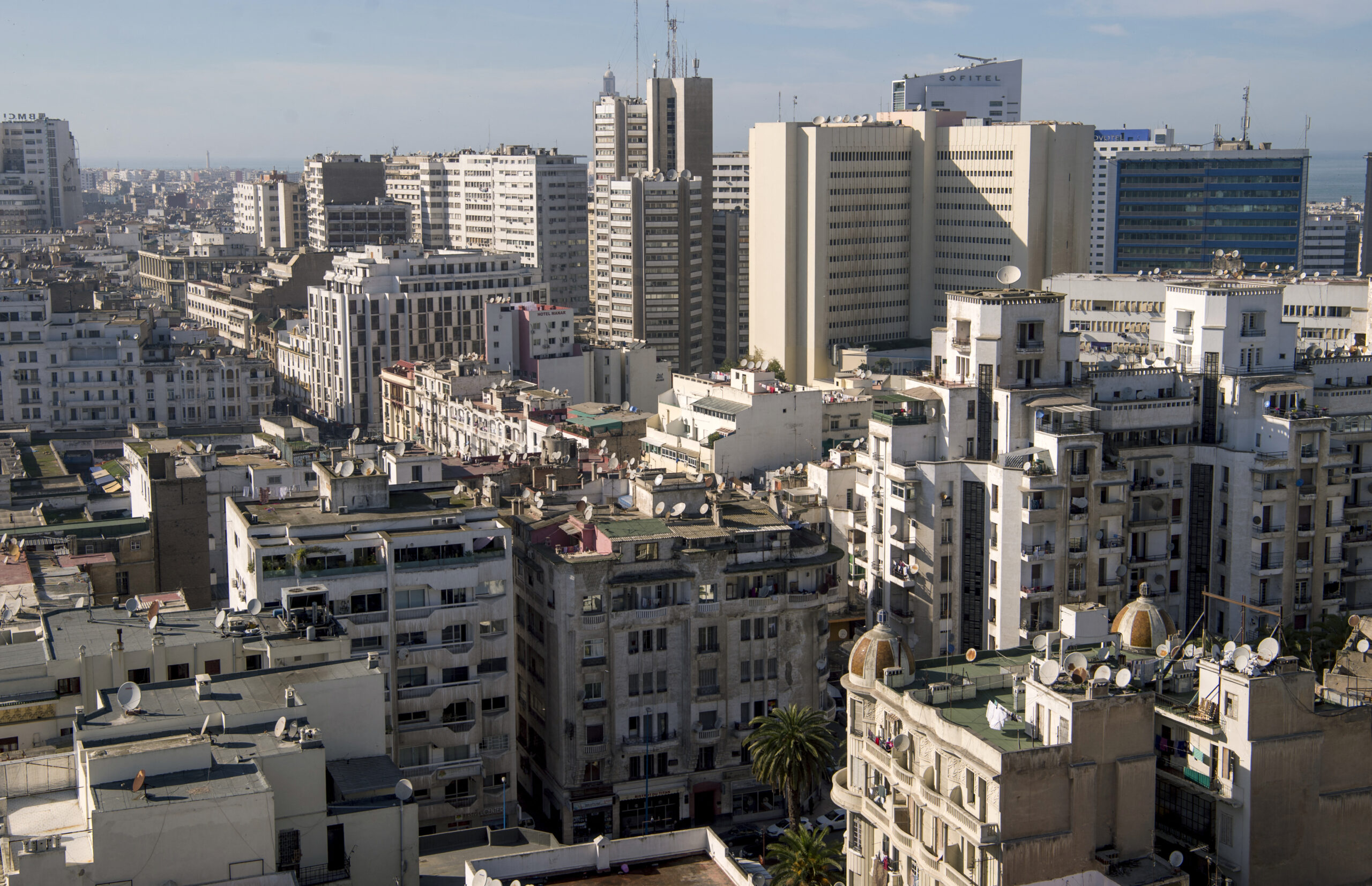
As inflation eases and investment grows, including in preparation for co-hosting the 2030 FIFA World Cup, Moroccan banks are benefiting from a strong domestic operating environment.
The economy grew by 4.4% in 2024 and then 4.9% in 2025. At the same time, the banking sector continues to be underpinned by one of Africa's strongest regulatory frameworks, helping Morocco retain its reputation as one of the continent's most stable and sophisticated financial markets.
The central bank, Bank Al-Maghrib, has kept its main benchmark interest rate at 2.25% since the third quarter of 2025, confident that inflation will remain weak at just 0.8% this year despite the global economic impact of the war in the Gulf. It also predicts that inflation will pick up over the next two years, although still staying below the 2% threshold.
Nevertheless, the central bank expects the country's current account deficit to rise to 3.1% this year on the back of higher energy import costs. Yet at the same time it forecasts that government debt as a proportion of GDP will fall from 50.8% in 2024 to 46% by 2027.
Bank Al-Maghrib forecasts 5.6% GDP growth this year, with foreign direct investment set to rise, overseas remittances increasing, tourist revenue rising and exports from the key phosphate and fertiliser sector rising.
The agriculture sector is also benefitting from plentiful rainfall after seven years of relative drought came to an abrupt halt. In a March 2026 report, consultants McKinsey said: "Macroeconomic stability - driven by solid GDP growth, controlled inflation, and sound monetary policy - is benefiting the banking sector by boosting credit demand, securing stable profit margins, reducing credit risks, and enhancing operational efficiency."
Following several years of economic disruption caused by the Covid-19 pandemic, supply chain dislocation and higher global interest rates, both the wider Moroccan economy and the country's banking sector are benefitting from years of targeted investment.
The volume of lending is growing with both digital banking and operations elsewhere on the African continent making a growing contribution. The total outstanding loan portfolio of Moroccan banks reached D1,192 trillion ($137.8bn) last year, a rise 6.5% on 2024. At same time, transport, renewable energy, manufacturing and water schemes are all creating opportunities for project finance, while stronger domestic demand is supporting consumer and corporate borrowing.
Lending directed at lifting productivity
Domestic lending increased by around 8% in 2025, the strongest growth since 2011, according to Attijari Global Research. Financing for equipment jumped by 25%, indicating that much of this lending is directed at lifting productivity rather than merely fuelling consumer borrowing.
Morocco continues to attract international manufacturers in the automotive, aerospace, electronics and battery sectors, while domestic investment in renewable energy, including green hydrogen, is increasing.
The 2030 FIFA World Cup, which Morocco will co-host alongside Spain and Portugal, is also driving project finance activity. An undecided but large number of matches will be played in Morocco, including possibly the final, with the brand new Grand Stade Hassan II to be built outside Casablanca and another five stadiums to be upgraded, while railways, airports and hotels will also be built or redeveloped.
As with their counterparts elsewhere in Africa, Moroccan banks are attempting to rein in operating costs, while expanding customer bases and strengthening their resilience against cyber threats through greater use of AI, biometric authentication and digital onboarding.
This has seen the sector's average cost-to-income ratio reach 47.4% in 2024, down from 56.6% four years earlier, as a result of higher trading income, increased leverage and cost efficiencies, according to McKinsey.
Newer banks such as CIH Bank and CFG Bank are offering more competition in digital banking. CIH Bank, which is focusing on providing digital banking service to younger people, achieved a Compound Annual Growth Rate (CAGR) of 11.1% between 2020 and 2024, well ahead of the market average of 5.2%.
Global digital-first banks, such as Revolut, have announced plans to enter the market but there have been mixed reports over Bank Al-Maghrib's willingness to allow bigger international neobanks to begin operating in the country in competition with Morocco's own digital and traditional banks.
Expanding financial inclusion
Bank Al-Maghrib, continues to work with government agencies and the banking industry to expand access to formal financial services, particularly among women, young people and rural communities.
Yet again, digital banking is playing a key role, offering remote account opening, electronic wallets and mobile payment platforms that lower the barriers to financial participation while reducing reliance on cash.
There is certainly plenty of untapped demand for banking services. The proportion of the adult population with bank accounts reached 56% last year, up from 42-44% just five years ago. According to the United Nations Secretary-General's Special Advocate for Financial Health, 15m Moroccans still lacked access to any bank accounts in 2023, mainly women and people in rural communities. According to the UN's figures from 2021, only 33% of women held accounts that year, in comparison with 56% for men.
Moroccan control over the domestic market will intensify somewhat as a result of the BNP Paribas' decision to sell its 67% stake in Moroccan bank BMCI, the country's fifth biggest bank, to Morocco's own Holmarcom Finance Company (HFC) at the end of April.
No figures for the transaction were given but the deal is expected to be completed by the end of this year, providing all regulatory hurdles are cleared. This is yet another deal where French or British banks have withdrawn from the African continent. BNP Paribas said it would continue to provide corporate and investment banking services in Morocco.
In line with many other countries, Morocco experienced a higher than normal non-performing loan (NPL) rate following the pandemic. Some of the NPLs have still not been settled or refinanced, so Bank Al-Maghrib is working to establish a secondary market for distressed assets, allowing banks to dispose of problematic loans more efficiently and recycle capital into new lending.
The NPL ratio peaked at 9.06% in 2021 as early pandemic moratoria expired and businesses adjusted to the slowdown but the rate has remained roughly the same between 2023 and now at 8.3%.
Banks active across Africa
Morocco's biggest banks, Attijariwafa Bank, Banque Centrale Populaire (BCP) and Bank of Africa (BOA), are all now very active across Africa, particularly in West Africa, operating in at least 15, 18 and 20 other African markets respectively.
Their operations outside of Morocco accounted for 25%, 25% and 40% of their total revenue and asset bases last year, making Morocco the second-largest regional banking power in Africa after South Africa. BOA has focused on cross-border expansion more than the other two and now operates in Eastern Africa as well as West and Central Africa.
Moroccan banks initially tend to launch retail banking operations in new African markets but are now also active in corporate finance, trade finance and investment banking. This should position them to make the most of the African Continental Free Trade Area, which is expected to drive increased demand for cross-border payments, trade finance and foreign exchange services.
BCP has invested heavily in digital banking platforms and financial inclusion initiatives, with its Chaabi Pay ecosystem becoming an increasingly important component of the Moroccan payments' landscape.
Operated by M2T, BCP's electronic payment subsidiary, the mobile wallet had 13.8m registered - although not necessarily active - users by the end of 2024, up from 10.3m at the end of the previous year. BCP's plan to repurchase up to 10% of its share capital was approved by shareholders in May 2026, as the bank rebalances its finances.